We developed Accu-Count to encourage more malls and retailers to focus on customer numbers, the centre of the sales and rental value chains. Low cost sometimes equates with low quality, this is not the case with Accu-Count.
Why Accu-Count?
Low cost, high accuracy and the ability to remotely validate counts via video are the main features that differentiates us.
see more…
How Accu-Count works
Accu-Count uses two cameras to build a 3D image that allows it to determine the height of people and track them.
see more…
Sensor Models
Accu-Count sensors come in variety of custom colours with different lens and connectivity options.
see more…
Sensor Health
Accu-Count sensors have management software that alerts you to any issues that may affect your count health.
see more…
Why Accu-Count?
Accu-Count sensors are designed to work in challenging environments. They are unaffected by shadows and direct sunlight, with verifiable accuracy of 98%+. Accu-Count offers wireless technology as well as self install options (under remote supervision) to reduce installation cost.
Other Features Include:
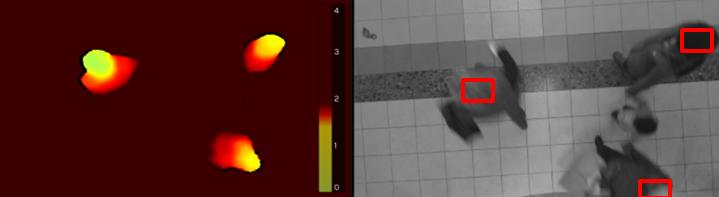
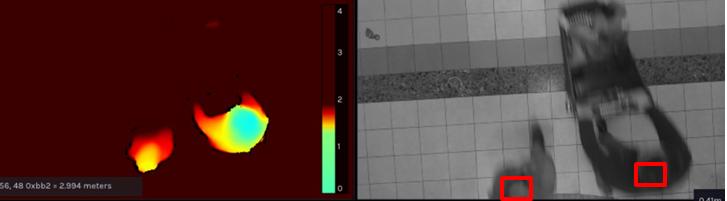
- Children and trolley filtering
- U-turn filtering
- Directional Counts
- 0 Lux capable
- GSM / POE / WIFI Ready – Requires minimal cabling for rapid deployment
- No on-site PC required
- System Health Monitoring
- Master and Node Configuration for wide entrances
- Remote calibration and count validation via a built-in video camera
- Ceiling mounted. Unlike horizontal sensors, they cannot be blocked.
Child Filtering
Trolley Filtering
How Accu-Count works
There are a number of different people counting sensors available on the market. Single lens (Mono lens / 2D) sensors use a technique called ‘background subtraction’ to detect movement when groups of pixels change colour. In scenarios where there is direct sunlight or shadows caused by lighting, the background subtraction technique struggles to maintain accuracy. Some single lens cameras try to use AI to improve counts by identifying patterns of people from the background, however, the main problem is, you’re still dealing with significant exposure issues and reliant on a training set that cannot cover every eventuality.
As an example, the images alongside show the difference in lighting from morning to afternoon. Shadows and overexposed areas in the afternoon cause a particularly challenging environment for a single lens camera. While most sensors will struggle to determine the number of people accurately in these scenario’s, this is not the case with Accu-Count.

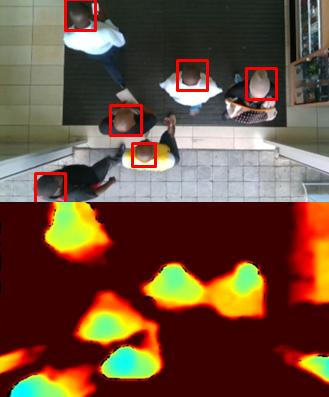
Rather than using pattern recognition, Accu-Count sensors use Dual-lens stereoscopic (left and right) depth perception technology and a non-visible infra-red pattern projector to build a 3D model of the entrance and determine and track the peak of each target as follows:
- The left and right cameras capture the scene. The image alongside shows 6 people walking through the entrance.
- Depth values are calculated for each pixel by correlating points from the left image to the right image.
- Depth pixel values are processed to generate a depth frame. This is enhanced by the infra-red pattern in images with low texture and light. The depth frame alongside shows the peaks of all the objects moving in its field of view.
- Subsequent depth frames create a depth video stream which is used to track and count the peak of objects (a person’s head) and not the whole object.
Accu-Count is accurate with crowds of people in close proximity and different lighting conditions. In the image above, you’ll see people in close proximity to each other are actually touching. Using the depth feed you’re easily able to distinguish the peak points of individuals.
Depth perception technology allows you to easily and accurately identify the peak of people’s heads from the background image. Shadows don’t have a peak, so they don’t interfere with the operation of Accu-Count sensors.
Sensor Models
Accu-Count sensors are available in a variety of custom colours. There are also a number of connectivity options, including (1) Wireless GSM, (2) Ethernet / POE as well as (3) Wifi.
Accu-Count sensors also come with 4 different lens, the mounting height determines which you need. The standard 90 degree lens covers heights of 5m and at this height has a field of view (FOV) of around 7m wide. The 60 degree lens covers heights from 5m – 7m, at these heights the FOV is around 3.6-6m. The ‘High-Mount’ covers heights up to 15m and with its extended 90 degree lens has an impressive FOV width of up to 15m.
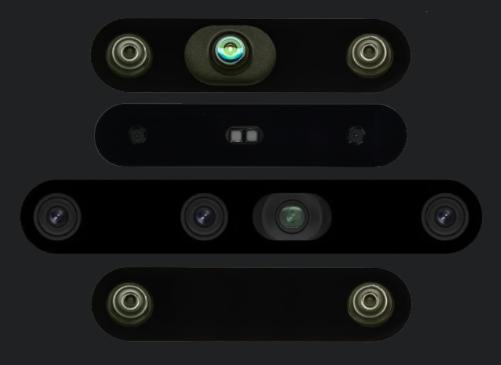
Accu-Count
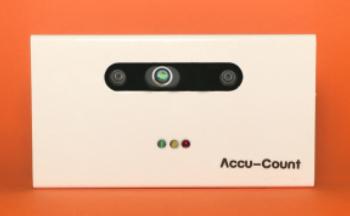
90 Degree Field of View
Installation Height: 2-5m
0 Lux Capable
Accu-Count 60

60 Degree Field of View
Installation Height: 5-7m
0 Lux Capable
Accu-Count High Mount

90 Degree Field of View
Installation Height: 7-15m
0 Lux Capable
Accu-Count Lite

90 Degree Field of View
Installation Height: 2-5m
Sensor Health

It doesn’t matter how accurate a sensor claims to be, if it is not installed and calibrated correctly or something happens after installation, the counts will not be accurate. All Accu-Count sensors feature health alerts, remote calibration and count verification to ensure correct setup and continued operation.
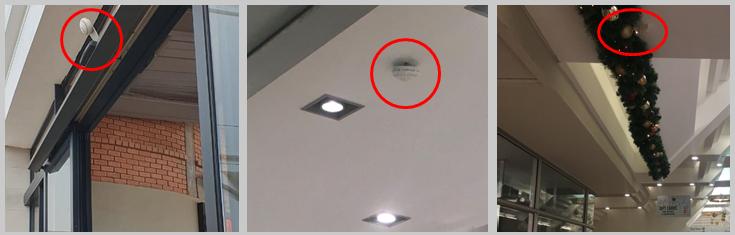
Shopping centres and retail stores are dynamic environments. Entrance configurations can change or move without the People Counting sensors being repositioned or re-calibrated. We’ve seen instances where sensors from a variety of vendors are knocked out of alignment or even dislodged from ceilings. There are also instances where sensors are blocked via signage / Xmas decorations.
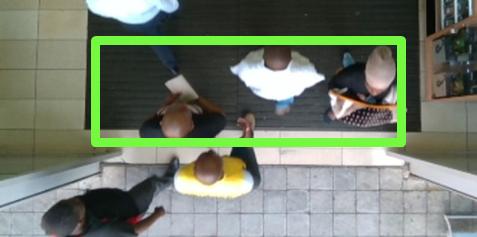
Accu-Count sensors all feature our sensor management system ‘OverWatch’. OverWatch monitors a number of metrics including the Area of interest, this is the region where people walk through. Without monitoring this area for changes there is no way of knowing if a sensor has been dislodged or blocked.
Alerts for changes in the Area of Interest, count trends and Remote access for verification are vital. Accu-count was developed to help identify problems and minimize downtime.
